Jumping Jacks Calorie Calculator
Estimate how many calories burned doing 100 jumping jacks, or calculate a different rep count or duration using your weight, pace and intensity.
Result
—
Estimated burn
— calories
- Time at this pace
- —
- Calories per 100 reps
- —
- Estimated reps
- —
This is an estimate from population averages. Fitness, technique, height and body composition can change the real result.
iPhone & iPad · Free
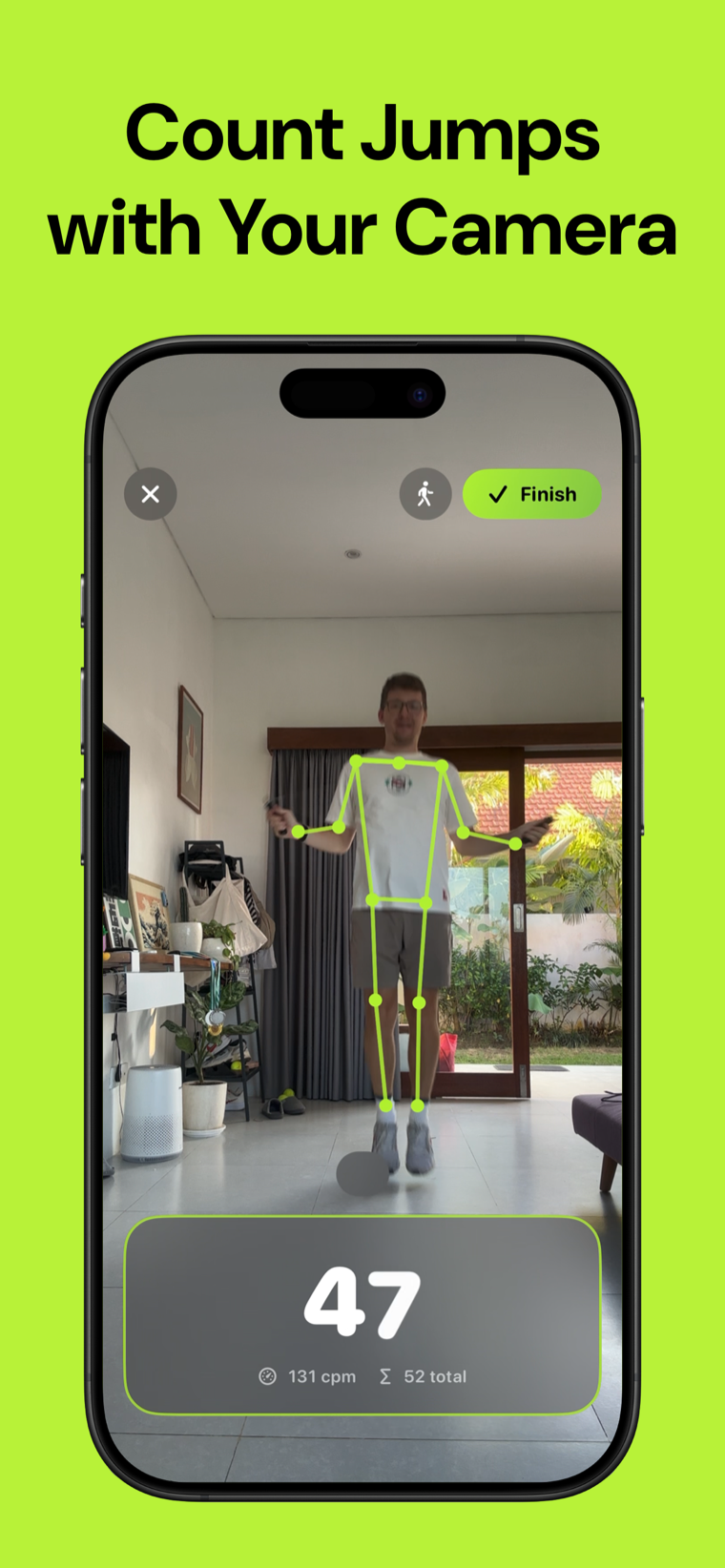
Track it in Jump Rope Counter.
Track jump-rope workouts, intervals and routines privately on your device.

How jumping jacks calories are estimated
If you are asking how many calories burned doing 100 jumping jacks, the honest answer depends on your body weight, pace and effort. This calculator uses vigorous and light-to-moderate calisthenics MET values, then converts your reps into minutes.
Reps are converted to minutes first because METs describe a rate, not a per-rep figure. Choose slow (40), moderate (50) or fast (60) jumping jacks per minute to match your pace.
This is an estimate from population averages. Real burn varies with fitness, technique, height and body composition, and MET tables do not adjust for any of them.
kcal per minute = MET × 3.5 × body weight in kg ÷ 200; minutes = reps ÷ pace For skipping rather than jumping jacks, use the sibling jump-rope calories calculator.
Jumping jacks calorie calculator FAQ
How many calories does 100 jumping jacks burn?
It depends on weight, pace and intensity. As a worked example, a 70 kg person doing 100 jumping jacks at 50 per minute burns about 19.6 kcal at vigorous effort.
Why do you need my pace?
METs estimate calories per minute, so pace is needed to convert a rep count into the time those reps take. The calculator offers 40, 50 and 60 jumping jacks per minute.
What is the difference between the intensity choices?
Vigorous effort uses 8.0 METs, while light-to-moderate effort uses 3.8 METs from the cited Compendium entries.
Can I enter a duration instead of reps?
Yes. Enter minutes and the calculator estimates calories for that duration and equivalent reps at your selected pace.
Is this calorie estimate exact?
No. It is based on population averages. Fitness, technique, height and body composition can change your actual energy use.